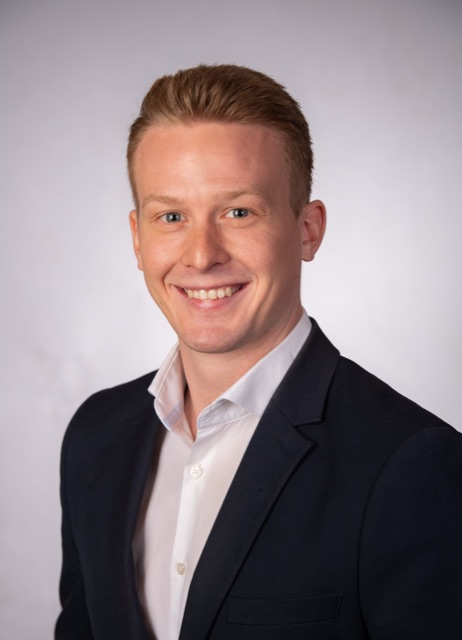
Raphael Schranz
Circular Economy · ISO 59000 · Profitable Resource Management
Multiple times certified Circular Economy Expert, helping companies reduce resource-related costs, add additional income streams, and reduce material dependency.
(67 million tons in total with partners)
(2,000+ municipalities in total with partners)
About
From waste flows to circular business models
Raphael Schranz works with industrial and production-oriented organizations on circular resource management, material flow optimization, reverse logistics and circular business systems – turning inefficiencies into measurable economic advantages through cost transparency, operational efficiency and strategic resilience, independent of short-term regulatory or ESG trends.
His approach combines applied ISO 59000 frameworks with hands-on operational experience, enabling companies to design resilient resource loops, stabilize supply chains, and improve long-term profitability.
Credentials
Certifications & networks
Certifications
Leadership, advisory & networks
- Advisor on Secondary Raw Materials – Circular Economy Forum Austria
- Partner – Austrian Blockchain Center
- Advisor – Global Sustainable Futures Network
- Former Senator – Senate of Economy Austria
- Former Ambassador & Board Member – European Technology Chamber
Curriculum vitae as slide deck
10 slides: certifications, standards work, experience and projects. PDF · English · 0.7 MB
Expertise
Shaping the standards – and applying them
Raphael helps organizations move beyond “take-make-waste” and build resilient, profitable and regenerative business models – by embedding ISO 59000, driving circular supply chains and creating ecosystems that integrate environmental, social and economic value.
Technical Expert, European Committee CEN/TC 473 WG4
Contributing to European standards on circular business models, supporting credible implementation across industries.
Technical Expert, National Committee 275
Technical expert at Austrian Standards International, supporting the implementation of ISO 59000 in practice.
Creator & Lead Auditor, CCEO
Created the “Certified Circular Economy Officer (acc. ISO 59004)” program at Austrian Standards and leads its assessments.
Head of Competence Center for Supply Chain & Circular Economy
Risk & Crisis Management Center (ZFRK) Austria
Austria
Resource Management Experience
- Design and rollout of regional separation and collection infrastructure
- Leadership of a fully automated, IoT-enabled resource collection center
- Secondary resource flow analysis with statistical and mathematical modeling
- Composting and bioenergy loops integrated into local energy systems
- Regulatory compliance with AWG, WFD, CEAP and EU circular economy directives
- Training and capacity building on waste avoidance and R-strategies
Projects
Circular economy projects
From regional business parks to international value chains and EU policy work.
1
Creation of a Circular Business Park in Sollenau, Austria
The challenge
Industrial sites run on linear flows: materials in, waste out, energy and water bought in. Companies sit side by side, yet rarely use what their neighbours throw away.
What Raphael did
Raphael designed the transformation of an industrial site into a regional Circular Economy Hub built on locally closed loops for materials, energy and water. The concept combines renewable energy, advanced material flow management and industrial symbiosis between co-located companies, with a focus on high-value strategies: reuse, repair, refurbishment and remanufacturing in automotive, construction and recycling.
Results
- Multiple localized loops for construction materials, plastics, spare parts and biomass, plus water reuse
- Energy surplus already achieved through photovoltaics
- A scalable model for circular industrial parks, aligned with EU circular economy policy
2
Blockchain-based, tokenized quality-audit trail for secondary raw material markets in Austria
The challenge
When recycled polyolefins re-enter the market, buyers need to trust their quality, source, environmental impact and compliance. Traditional audit trails are slow, opaque and fragmented across suppliers and systems.
What Raphael did
In just three days, Raphael worked hands-on with Wastics, one of Austria’s most forward-thinking circular economy startups, to prototype the future of quality assurance. The audit trail became a dynamic, immutable digital asset on the XRP Ledger, carrying environmental metrics (CO₂ savings, water use, energy input), economic metadata (costs, batch sizes, price per kg) and material provenance (origin, treatment, certification status). Smart contracts model the payment flow for polyolefin batches.
Results
- Payments released automatically when verification milestones such as lab analysis or shipping confirmation are met
- Tokenized bonuses that reward top-tier recycled input, and carbon-offset matching directly in the transaction layer
- A Wastics representative certified as Circular Economy Officer (ISO 59004) within the same project
- The foundation for Austria’s first circular economy data and trust infrastructure, transferable to paper, glass and metals
3
Circular Economy Complexity Analysis for the European Green Deal
The challenge
A fair and sustainable Europe means advancing six priorities at once, and they pull against each other. Decisions made in isolation create trade-offs nobody planned for.
What Raphael did
Raphael contributed to the Complexity Analysis of the European Green Deal, run by the Dutch Research Institute for Transition (DRIFT) in the EU-funded Shared Green Deal Arena Series. With more than 100 stakeholders from policy, research and industry, he used the X-Curve model and a back-casting approach to map clean energy, circular economy, efficient renovations, sustainable mobility, sustainable food and biodiversity.
Results
- Future scenarios and transition pathways for a European Circular Industrial Economy
- Implementation timelines that make trade-offs and co-benefits between the six priorities visible
- Analysis of feedback loops between energy and food production and consumption
- Data-driven insight that supports evidence-based policy for a climate-neutral, resource-efficient Europe
4
Circular safety textile value chain in the Czech Republic
The challenge
Corporate sustainability programmes often fail for lack of structure, depth and execution. Ardon’s value chain spans hundreds of suppliers and customers on several continents, which makes reliable data the hardest part.
What Raphael did
Together with Sustainova, Raphael ran a full Scope 1–3 carbon footprint assessment (all 15 GHG Protocol categories, with data from hundreds of suppliers and customers worldwide), a circular economy and sustainability analysis, an impact assessment and a strategy roadmap. A circular design gap analysis covered the product portfolio (vests, trousers, masks, helmets, fall arrests) with R-strategies focused on reuse, refurbishment and remanufacturing, and short virtual workshops trained suppliers and customers.
Results
- Exact optimization areas identified in Scope 1 and renewable energy opportunities in Scope 2
- 4 key emission hotspots highlighted among the 15 Scope 3 categories
- Roadmap targets: renewable-based electrification by 2030 and product take-back programmes by 2027
- A blockchain-based digital product passport strategy and a blueprint for the future European safety textile industry
5
Circular construction blueprint in Sweden
The challenge
Construction is one of the largest waste producers, and usable materials are demolished and discarded because there is no easy way to find, trade and reuse them.
What Raphael did
Raphael started with a Circular Economy Session in Vilstal, part of the SocialTech4EU initiative, to build a shared understanding of circular operations, the value proposition of Återbygget Ekonomisk Förening and Industry 4.0/5.0 tools such as BIM models. He then developed a strategic roadmap for reuse, preventive maintenance, renovation, refurbishment and repair, and introduced a digital marketplace for secondary raw materials to bring transparency and verifiable data.
Results
- Waste tied to existing infrastructure virtually eliminated through reuse-based strategies
- Quantifiable reductions in emissions and lower costs across the board
- A digital secondary material market that shows how technology supports environmental sustainability
- New employment opportunities and a sustainability model that can be copied by other industries
6
Circular coffee supply chain in Ethiopia
The challenge
Used coffee grounds are usually thrown away as waste, although they are a valuable resource. Along a coffee supply chain, that value is lost to the economy and the environment pays for it.
What Raphael did
Raphael designed a tailored training programme for Coffee Resurrect, covering the core principles of circularity (circular design and the slowing, narrowing and closing of loops), industrial symbiosis, biotechnology and cascading cycles, sustainable sourcing and circular product and system design. He also supported the company with consulting: a circular business strategy aligned with its mission, assessments of the environmental benefits, and the identification of new market opportunities and partners.
Results
- Used coffee grounds upcycled into a range of valuable products through strategic partnerships, so no part goes to waste
- Less waste and new economic opportunities for multiple stakeholders
- A replicable circular bioeconomy model that other industries can follow
7
EU social cohesion parameters, formulated with the European Economic and Social Committee
The challenge
The European Green Deal is often driven top-down, while political apathy and distrust keep communities on the sidelines, even though permaculture initiatives, transition networks and ecovillages already deliver change from the bottom up.
What Raphael did
With the European Economic and Social Committee (EESC) and ECOLISE, the European network for community-led initiatives on climate change and sustainability, Raphael helped co-create strategic parameters that strengthen the role of local communities in the EU’s sustainability transition. The approach is holistic and systemic, takes on biodiversity loss and pollution, and promotes a regenerative mindset in which humans are an integral part of nature.
Results
- Decentralized, community-based action placed on the EU sustainability agenda, led by permaculture initiatives, transition networks and ecovillages
- Support for decentralized funding pools so resources reach community-led projects effectively
- Trust rebuilt between policymakers and communities, with community-led initiatives integrated into the wider Green Deal framework
Circular Intelligence Platform
Design · Map · Optimize · Scale
Raphael's expertise, built into software. Create your ISO-standardized circular business model in minutes and quantify your return on investment.
Build a Circular Business Model
Design an ISO 59010-aligned circular business model with a CSRD ESRS E5-ready report, AI-powered strategy, ROI calculation and EU Taxonomy alignment.
StrategyResource Exchange
Find buyers for your waste streams or source secondary raw materials – with waste-code (EWC) search, logistics and industrial-symbiosis partner matching in one module.
ExchangeMaterial Flow Analysis
Model your material and process flows as a node graph, with automatic checks that inputs and outputs balance (mass balance) and ISO 59020 circularity KPIs.
AnalysisCircularity Knowledge Hub
Explore ISO standards, CSRD compliance and circular design through expert-curated content – including Raphael's articles.
KnowledgePartner Portfolio
Discover verified partners from circular tech, universities, waste management, bioeconomy and digital product passports.
PartnersServices bookable on the platform
1 Hour Strategy Call
A focused 1-hour strategy call directly with Raphael Schranz, Certified Circular Economy Specialist — to clarify your circular economy goals and plan the right training for your team.
Strategy CallPersonalized Education & Executive Training
Become a Circular Economy Expert certified through Austrian Standards International, based on ISO 59000 — tailored 1:1 or team training for executives.
TrainingKeynote Speaker & Panelist Booking
Book Raphael Schranz as a speaker or panelist for your conference, corporate event, or podcast.
KeynoteMaterial & Resource Flow Assessment
We map your material, energy, and water flows, quantify what’s lost as waste, and calculate the cost-reduction potential of a targeted infrastructure investment to redirect those flows back into your operations.
Assess FlowsISO 59000 Readiness Audit
A formal gap audit of your business model against ISO 59004, 59010, and 59020 — delivered as a readiness report with a prioritized action plan, so you know exactly where you stand and what to fix first.
Gap AuditContact
Let's close your loops
Whether you need a circular strategy, an ISO 59000 readiness audit or a keynote – book directly on the platform. For a personal conversation, book a 1 Hour Strategy Call.